When Life Gets Complicated, We Get Simple. Period.
There are seasons of life when everything feels complicated.
Work is demanding. Relationships are messy. The news is overwhelming. Someone we love is struggling. Our bodies are tired. Our schedules are packed. There are decisions to make, problems we cannot immediately solve, and circumstances that are simply outside of our control.
And when life gets complicated, I have learned something important:
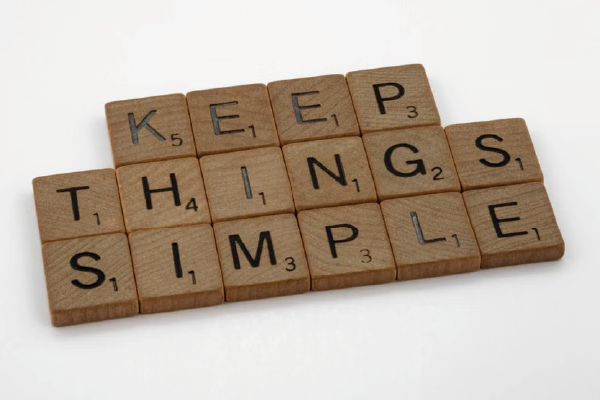
We get simple. Period.
Not because simplicity fixes everything.
It doesn't.
But when so much feels outside of our control, there is something incredibly grounding about coming back to what is right in front of us.
What am I eating?
Am I drinking enough water?
Have I moved my body today?
When was the last time I stepped outside?
Have I rested—not necessarily slept, but actually allowed myself a pocket of time when I wasn't producing, fixing, answering, scrolling, or taking care of someone else?
These things sound almost too simple.
And maybe that's exactly the point.
Regulation Doesn't Always Have to Be Complicated
We live in a culture that loves to optimize everything.
There is always another supplement, morning routine, healing protocol, app, podcast, treatment, productivity system, or wellness trend promising to make us feel better.
Some of those things can be helpful.
But sometimes our nervous systems don't need more.
Sometimes they need less.
A glass of water.
Something nourishing to eat.
Ten minutes outside.
A walk around the block.
Stretching while the coffee brews.
Opening a window and feeling fresh air.
Putting your phone down.
Sitting somewhere quiet for five minutes.
Going to bed a little earlier.
None of these things are revolutionary.
But regulation often happens through small, repeated experiences of safety and care.
Look for the Glimmers
Polyvagal-informed work gives us a beautiful word for some of these moments: glimmers.
Glimmers are those small moments when our nervous system detects cues of safety, connection, or ease. They don't have to be dramatic. In fact, they're often incredibly ordinary.
Sunlight coming through the window.
A dog sleeping beside you.
The smell of coffee.
A song you love.
Cool air on your face.
Someone making you laugh.
Birds outside your window.
Flowers blooming.
A tomato finally turning red.
For me, some of my glimmers are incredibly simple.
My bird baths. My flowers. My little tomato garden.
I can walk outside and see what is blooming. I can notice which birds have stopped by. I can check whether another tomato is growing.
Nothing about the larger world has necessarily changed.
But for a moment, my attention has.
And that matters.
Come Back to What You Can Control
When we are overwhelmed, our attention naturally gravitates toward what feels uncertain.
What is going to happen?
What if this doesn't work out?
What is that person going to do?
How am I going to manage all of this?
We can spend enormous amounts of emotional energy trying to mentally solve things that cannot be solved today.
Sometimes the most regulating question is much smaller:
What is within my control right now?
Maybe I cannot control what happens next month.
But I can eat lunch.
I cannot control someone else's behavior.
But I can take a walk.
I cannot resolve every problem today.
But I can drink some water, step outside, turn off the television, text someone I love, or give myself twenty minutes to rest.
That isn't avoidance.
It is recognizing the difference between what requires our attention and what requires our surrender.
The Beauty of Pockets
I also think we underestimate the power of pockets.
A pocket of quiet.
A pocket of movement.
A pocket of sunlight.
A pocket of laughter.
A pocket of connection.
A pocket of doing absolutely nothing.
We sometimes believe that self-care only "counts" when we have an entire free afternoon, an hour-long workout, a vacation, or enough time to complete some elaborate routine.
Most of us don't consistently have that kind of time.
But we might have five minutes.
We might have ten.
And our nervous systems can experience those moments too.
Five minutes sitting outside without your phone is still five minutes outside.
A ten-minute walk is still movement.
Closing your eyes and resting for three minutes is still rest.
Small doesn't mean insignificant.
Maybe We Don't Need to Add Anything
When people feel overwhelmed, the instinct is often:
What else should I be doing?
Maybe that's not always the question.
Maybe the question is:
What can I simplify?
What can I stop doing?
What can wait?
What expectations can I loosen?
What am I making harder than it needs to be?
What basic need have I been overlooking while trying to manage everything else?
There will always be parts of life that are complicated.
There will be seasons when we need therapy, medical care, community, deeper support, difficult conversations, or significant change. Simplicity isn't a substitute for any of those things.
It is something we can return to while we move through them.
Eat.
Hydrate.
Move.
Rest.
Step outside.
Notice something beautiful.
Connect with someone safe.
Look for the glimmer.
Come back to what is here.
Come back to what you can control.
And when life gets complicated?
We get simple. Period.
Keep It Simple With Us
At EngagedMinds Continuing Education, we believe learning, healing, and professional growth don't always have to be complicated either.
Sometimes it's one new idea.
One practical tool.
One meaningful conversation.
One small shift that changes the way you understand yourself, your clients, or the work you do.
Our trainings are designed to make trauma-informed, evidence-informed education practical, accessible, and something you can actually use—not just something else to add to your already-full plate.
If you're a mental health professional looking for learning that feels human, practical, and grounded in the realities of clinical work, we would love to have you join us.
Explore upcoming EngagedMinds trainings, workshops, book clubs, and community events at EngagedMindsCE.com.
Because sometimes growth doesn't require doing more.
Sometimes it starts with one small thing.